
What Waiting One More Season Really Costs
A garage door spring doesn't usually give you much warning before it lets go completely. One day it's lifting the door fine, and the next it snaps with a bang loud enough to bring the neighbors outside. When that happens, the door can slam down hard enough to crack a panel, damage a car parked underneath, or injure anyone standing nearby. On top of that, a sudden break almost always means an emergency service call instead of a scheduled repair, which costs more and leaves your garage out of commission until someone can get to you. Catching the warning signs early turns an expensive surprise into a routine fix.
Springs do most of the work lifting a door that can weigh well over 100 pounds, and they're built to handle a set number of open-and-close cycles before metal fatigue sets in. Once they're past that point, cold weather, rust, and daily use just speed up the clock. With winter coming and temperatures about to swing hard, now is a good time to walk out to the garage and actually look at your springs instead of waiting for them to tell you something's wrong.
Know Which Type You Have
Before you start checking, figure out which spring system your door uses, since the warning signs look a little different for each.
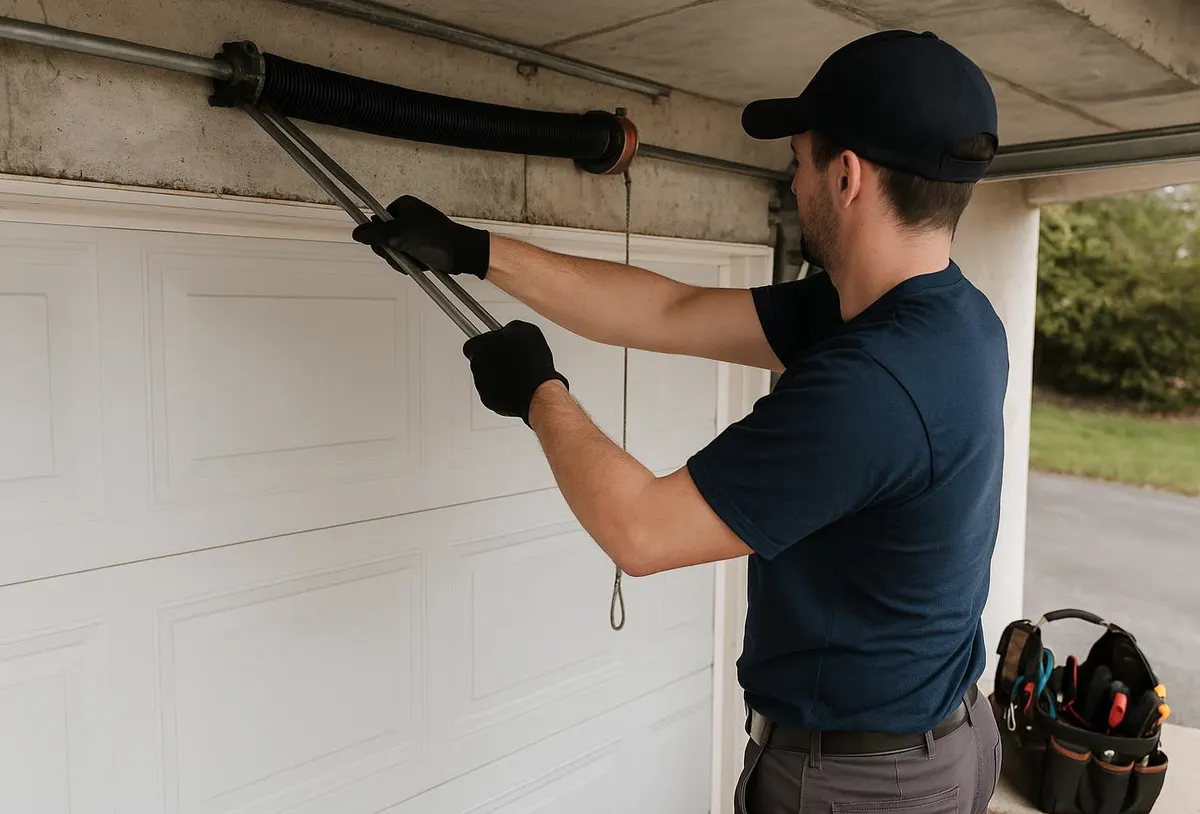
- Torsion springs are mounted horizontally on a metal shaft directly above the closed door, usually one or two thick coiled springs.
- Extension springs run along the horizontal tracks on either side of the door, stretching and contracting as the door moves.
Both wear out, but they fail differently, so the checklist below covers signs for each.
The Walk-Around Checklist
1. Visible Gaps or Separation in the Coils
Look closely at a torsion spring's coils. If you see a gap where the metal has pulled apart or isn't sitting flush, that's a sign the spring has already stretched past its working tension. A gap usually means the spring is close to breaking and shouldn't be tested by opening the door manually.
2. Rust, Flaking, or Discoloration
Humid summers followed by salt-heavy winters are hard on exposed metal, and springs mounted near a garage entrance pick up moisture and road salt tracked in on tires. Surface rust alone isn't an emergency, but flaking, pitting, or a rough, crusty texture means the metal is weakening from the inside out and losing the strength it needs to hold tension safely.
3. The Door Hangs Crooked When Opening
With two torsion springs, one can weaken faster than the other. If the door looks tilted or one side lifts before the other when you open it, that's usually one spring doing more work than it should. Left alone, the overworked spring wears out faster and the imbalance puts extra strain on the opener and tracks.
4. The Door Won't Hold Position Halfway Up
Disconnect the opener (pull the release cord) and lift the door manually about halfway. A healthy spring system holds the door in place on its own. If it drifts downward or feels noticeably heavy, the springs have lost enough tension that they're no longer doing their share of the lifting.
5. Loud Pops, Bangs, or Creaking During Operation
A single loud bang with no obvious cause can mean a spring has already cracked, even if the door still opens using the other spring or the opener's motor strength. Repeated creaking or popping sounds during normal use point to metal fatigue building up before a full break.
6. The Opener Strains or Slows Down
Garage door openers are designed to assist the springs, not replace them. If the motor sounds like it's working harder than usual, the door opens more slowly than it used to, or the opener seems to struggle and then catch up, the springs are likely no longer carrying their share of the door's weight.
7. Stretched or Elongated Extension Springs
For extension-spring systems, compare both sides. A spring that looks noticeably longer or more stretched out than its matching spring on the other track has lost elasticity and is past its reliable lifespan.
8. Frayed Cables Near the Bottom Brackets
While you're checking springs, glance at the lift cables attached to the bottom corners of the door. Fraying here often shows up around the same time as spring wear, since both systems are under constant tension and age together.
Why Cold Weather Makes This Urgent
Metal contracts in cold temperatures, and a spring that's already fatigued has less flexibility to handle that extra tightening. The first hard freeze or a stretch of single-digit mornings is a common time for a weak spring to finally give out, especially after a summer of humidity-driven rust. If you've spotted even one or two items on this checklist, it's worth addressing before winter settles in rather than waiting to see if the spring makes it through the season.
When to Call Akron Garage Door Experts
If you've found gaps in the coils, visible rust damage, or a door that won't hold its position, it's time to have a professional take a look rather than attempting a DIY fix. Springs are under extreme tension and can cause serious injury if handled without the right tools. Our Spring Replacement service covers both torsion and extension systems, and we'll check the matching spring, cables, and opener strain while we're there. If you'd rather stay ahead of problems altogether, our Garage Door Maintenance visits catch early wear before it turns into a weekend emergency.
If you're in Akron, Cuyahoga Falls, Barberton, Copley, Fairlawn, Stow, Tallmadge, or Norton and noticed any of the signs above, give Akron Garage Door Experts a call before the next cold snap puts your springs to the test.