
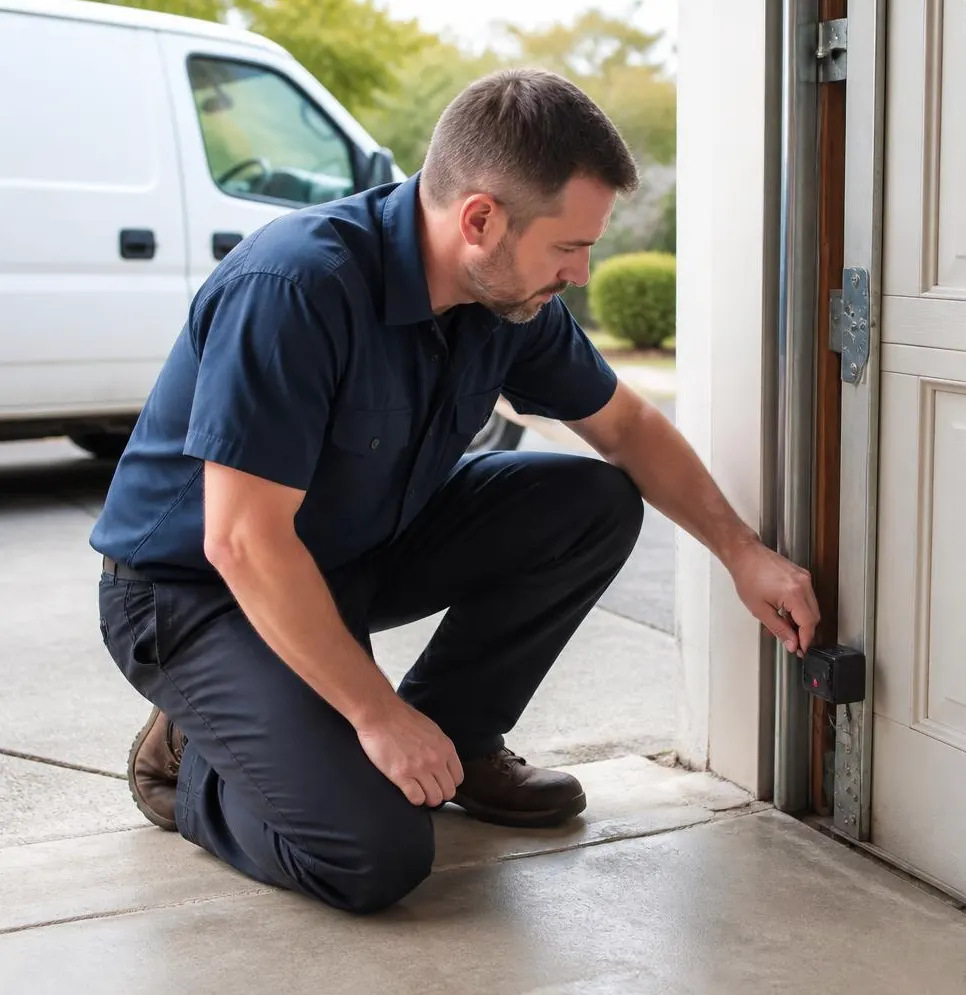
What a Technician Sees on These Calls
A typical call starts the same way: a small business owner in Barberton or Stow says their "garage door" won't open, and when the technician shows up, it's not a garage door at all — it's a commercial overhead door hung on hardware that was never built for the job. Sometimes it's the opposite problem: a homeowner installed a heavy-duty steel door on a detached garage or workshop and then wonders why a basic residential opener keeps straining or burning out. Either way, the call usually ends with the same explanation: these are two different products built for two different workloads, and treating one like the other is where most of the trouble starts.
What Actually Makes a Commercial Door "Commercial"
The differences aren't cosmetic. A commercial or warehouse overhead door is built around how often it will cycle (open and close) and how much abuse it will take over its lifetime.
- Cycle count: Residential torsion springs are typically rated for around 10,000 cycles. Commercial-grade springs are often rated for 20,000, 50,000, or even 100,000+ cycles because a loading dock door might open dozens of times a day instead of two or three.
- Steel gauge and panel construction: Commercial doors use heavier gauge steel and reinforced panels to stand up to forklift traffic, pallet jacks, and general wear that a residential door was never designed to absorb.
- Track and hardware size: Commercial tracks, rollers, and hinges are built to larger tolerances to support wider, heavier door sections — think warehouse bay doors versus a standard two-car residential door.
- Motor and opener strength: Commercial operators are rated in horsepower and duty cycle, built to run many times a day without overheating. A residential opener forced into that role will wear out fast, sometimes within months.
- Spring systems: Many commercial doors use heavier torsion springs or multiple spring setups because the door itself weighs significantly more and needs more stored energy to lift smoothly and safely.
None of this means commercial doors are "better" — they're built for a different job. Putting commercial-grade hardware on a home garage is overkill and costly. Putting residential hardware on a commercial door is a shortcut that fails early, sometimes dangerously.
Different Jobs, Different Stress
Think about how a door actually gets used. A homeowner's garage door might cycle two to six times a day. A commercial bay door at an auto shop, distribution point, or warehouse in Cuyahoga Falls or Copley might cycle 30, 50, or more times in a single shift, often with a vehicle or loaded cart waiting on the other side. That volume of use changes everything — spring life, roller wear, track alignment, and how often the opener's motor has to work.
Weather adds another layer locally. Commercial doors here deal with the same cold winters, road salt, and ice that residential doors do, but often with more exposure — loading docks sit open longer, bay doors get hit with more moisture and grit tracked in by vehicles, and summer humidity adds rust risk to hardware that's already working harder. A door cycling dozens of times a day through a Northeast Ohio winter needs lubrication and inspection far more often than a home garage door that opens a handful of times a day.
Where Homeowners Get This Mixed Up
This is usually where the argument starts. One spouse wants to install a heavy-duty steel door on a home workshop or detached garage because it "seems sturdier," without realizing the springs and opener also need to be upsized to match — otherwise the opener strains constantly and the springs wear out ahead of schedule. The other spouse assumes a basic residential door and opener combo can handle a side business with constant in-and-out traffic, like a small repair shop or storage operation, and then can't figure out why the springs fail twice in one year.
The honest answer: match the hardware to the actual use, not just the size of the opening. A big door isn't automatically a commercial door, and a commercial-rated opener on a lightly used home garage is money spent on capacity you'll never use.
Maintenance Needs Differ Too
Because commercial doors cycle so much more, their maintenance schedule should be tighter:
- More frequent lubrication of rollers, hinges, and tracks — monthly in high-use settings versus a couple of times a year for most homes.
- Regular torsion spring inspection, since high-cycle springs wear down faster even when rated for more cycles overall.
- Track alignment checks, especially after winter months when ice, salt buildup, and temperature swings can shift hardware slightly over time.
- Opener performance checks — listening for straining, slow response, or overheating, which often signals the motor is undersized for current use.
Residential doors still need seasonal attention, but the stakes and frequency are different when a door is part of daily business operations rather than a few trips in and out each day.
When to Call Akron Garage Door Experts
If you're not sure whether your door and opener are actually matched to how you're using them — home garage, detached workshop, or small business bay door — that's worth a second opinion before something fails mid-use. Akron Garage Door Experts handles both garage door installation and garage door maintenance, and can look at your current setup, cycle frequency, and local exposure to winter salt and humidity to tell you honestly whether your hardware fits the job or needs an upgrade.
If you're in Akron, Cuyahoga Falls, Barberton, Copley, Fairlawn, Stow, Tallmadge, or Norton and want a straight answer instead of a guess, call Akron Garage Door Experts and we'll settle it for you.